


Global markets were volatile throughout the quarter amid the first Fed rate hike in years, the ongoing Iran conflict, and the approaching midterm elections. Mid- and small-cap stocks, which are typically more sensitive to changes in interest rates, gave back a portion of their recent outperformance, while bonds moved lower as higher interest rates pressured existing debt securities. Despite the challenging environment, our globally diversified portfolios remained resilient, helping to limit downside risk while preserving exposure to global growth opportunities.
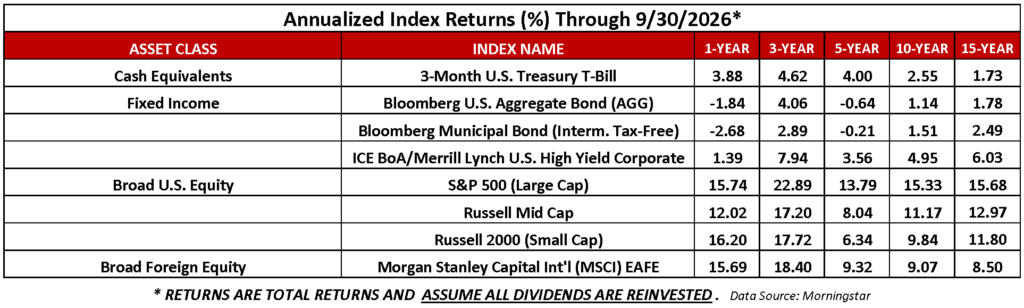
Cash & Fixed Income: Cash led for the quarter, 1-year, and 5-year periods, while high-yield corporate bonds led for the 3-, 10-, and 15-year periods. Tax-free municipal bonds were the laggard in the quarter, 1-year, and 3-year periods. The aggregate bond index lagged for the 5-year and 10-year periods, while cash remained the worst performer over 15 years.
In August, ahead of the Federal Reserve’s first rate hike in three years, we took a more defensive stance within our fixed income allocations by reducing bond exposure and interest-rate sensitivity (duration). As part of a tactical rebalance, we replaced our current bond fund with a fund which is better positioned for a rising-rate environment. We also reduced overall bond allocations. Proceeds from these sales were primarily reinvested into alternative investments to provide continued portfolio ballast, enhance diversification, create additional growth opportunities, and improve risk management in the current market environment.
Equities: Small-cap stocks still led over the last 12 months, but large-cap stocks led in all other periods. After leading last quarter, small-cap stocks were the worst performer this quarter and over the last 5 years. Mid-cap stocks were the worst performer in the 1-year and 3-year periods, with foreign stocks still lagging over the longer 10- and 15-year periods.
As part of our tactical rebalance, we took profits primarily within large-cap equities and reallocated proceeds to underweight equity asset classes, bringing allocations back in line with our long-term strategic targets. Following the reduction in bonds, we meaningfully increased exposure to alternative investments, with allocations rising by 20% to 80% depending on portfolio risk profile. These changes enhanced diversification, improved portfolio resilience, and broadened potential sources of return.
The global economy continues to adjust to higher interest rates, reinforcing our more defensive positioning within fixed income. While rising rates have created short-term pressure on bond markets, they are also creating attractive opportunities to invest in newly issued debt at higher yields. Over time, we expect to return to a more balanced bond allocation. For now, we believe it is prudent to maintain an underweight position in fixed income and an overweight allocation to alternatives. With the midterm elections approaching, we expect market volatility to remain elevated, as is common during election cycles. However, the global growth story is still intact, which bodes well for risk assets. As always, we will continue to monitor economic and market conditions and will make portfolio adjustments as opportunities arise.
This Commentary is provided by Spraker West Wealth Management, a registered investment advisor, and is for informational purposes only. It should not be construed as investment advice and is not intended as a solicitation of any specific product or service. Investments and/or investment strategies include risk including the possible loss of principal. There is no assurance that any investment strategy will achieve its objectives. Information provided is not intended as tax or legal advice and should not be relied upon as such. You are encouraged to seek tax or legal advice from a qualified professional.